What Is Roots Music? A Listener's Map
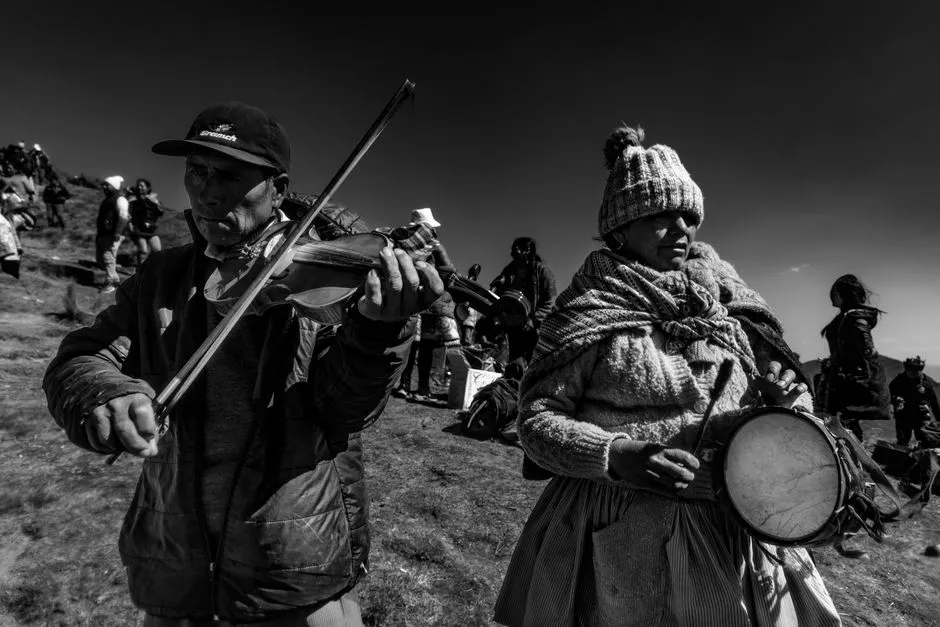
- Roots music is an umbrella, not one fixed genre
- Why “roots” has more than one meaning
- Roots, folk, traditional, and Americana
- Tradition means transmission and change
- Instruments do not prove a category
- Roots music is culturally specific
- A practical way to use the label
- Use the umbrella to find the branches
Roots music is an umbrella, not one fixed genre
Roots music broadly describes music connected to community-based, traditional, or historically influential styles. In U.S. contexts, the umbrella may include folk, blues, gospel, old-time, bluegrass, Cajun, zydeco, Tejano, country, and other traditions, depending on who is using the term. It can also describe contemporary music shaped by those sources.
The label does not mean that every example is acoustic, old, rural, or anonymous.
Why “roots” has more than one meaning
An archive may use the term to organize historically related traditions. A festival may use it for a broad program. A record store or radio format may apply it to contemporary artists who draw from older forms. A community may prefer a more specific name that reflects its own history.
Those uses overlap, but they are not identical. Ask what the speaker is grouping and why before treating a playlist or award category as a final definition.
Roots, folk, traditional, and Americana
| Term | Common use | Important limit |
|---|---|---|
| Traditional music | Music learned and transmitted within a community or tradition | Traditions change and can include known composers |
| Folk music | Traditional music and music created in relation to folk styles or ideals | Meaning differs across scholarship, scenes, and eras |
| Roots music | Broad umbrella for foundational and tradition-linked styles | Especially common in North American industry and criticism |
| Americana | Contemporary U.S.-oriented field drawing across country, folk, blues, gospel, rock, and related sources | It does not contain every American roots tradition |
The boundaries are porous. A recording can be described by several terms, and a musician may reject a label that an industry database applies.
Tradition means transmission and change
Traditional songs are often learned informally through families, communities, gatherings, work, worship, dance, or local performance. As a song moves between people, lyrics, melodies, rhythms, language, function, and instrumentation can change. Multiple variants are evidence of transmission, not necessarily corruption of one original.
Some songs have no known individual author; others do. A newly written song can enter a tradition, and a known composition can circulate until communities reshape it. “Traditional” should not be used to erase identifiable creators or cultural ownership.
Instruments do not prove a category
Fiddle, banjo, guitar, accordion, harmonica, and unaccompanied voice appear across many roots traditions, but no instrument belongs to only one genre. Electric instruments, amplification, studio production, and drums do not automatically make music rootless.
Listen instead for repertoire, performance practice, rhythm, social function, language, lineage, and the artist's stated relationship to a tradition. A quiet acoustic singer-songwriter is not automatically a folk tradition bearer, while a dance band using amplification may sit squarely within a community tradition.
Roots music is culturally specific
Broad umbrellas can hide the distinct histories of Black, Indigenous, immigrant, regional, religious, working-class, and other communities. Use the most specific accurate name you can verify, and learn how practitioners describe their own music.
Avoid treating roots music as a museum of a pure past. Traditions have always met commerce, migration, technology, politics, and neighboring sounds. Contemporary change can be part of continuity.
A practical way to use the label
When a service calls something “roots,” treat that as an invitation to ask four questions:
- Which named tradition or traditions are involved?
- Who performs and sustains them?
- How was the music learned or transmitted?
- Is this a community term, an artist description, or an industry category?
Then follow the more specific answer. The guide to starting with folk music offers a listening path built around place and repertoire rather than a giant genre shuffle.
Explore more flexible definitions in Roots Map.
Use the umbrella to find the branches
Roots music names a broad relationship to tradition and influential source styles. Its value is navigational. Let it lead toward a precise community, history, or practice, then use that more specific language whenever the evidence supports it.